
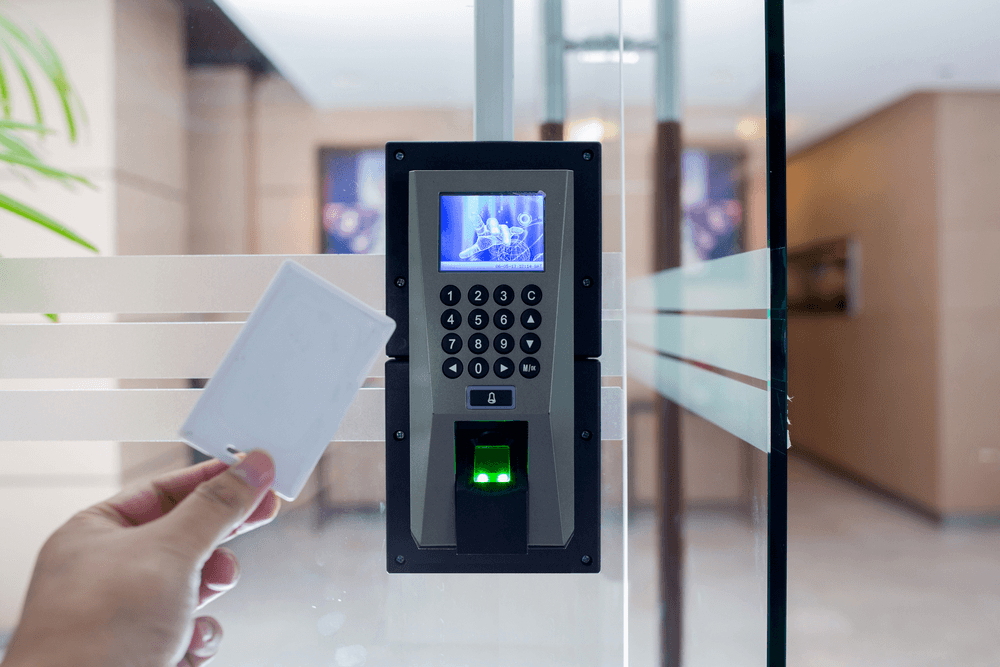
In the realm of access control and security, door entry systems serve as a fundamental component for regulating entry into buildings, facilities, and private residences. These systems provide a means of authentication and authorisation, allowing authorised individuals to gain access while keeping unauthorised employees out. From traditional mechanical locks to advanced electronic solutions, door entry systems have evolved significantly to meet the diverse needs of modern security environments.Let's delve into what is door entry system is and how it functions:
What is a Door Entry System?
A door entry system, often referred to as an access control system, is a mechanism installed at entry points to control and manage who can enter a premises. It typically consists of several components working together to verify the identity of individuals and grant or deny access accordingly. The primary components of a door entry system include:
- Reader: The reader is the device used to collect credentials from individuals seeking access. It can be in the form of a keypad, card reader, biometric scanner (such as fingerprint or iris recognition), or a combination of these technologies.
- Controller: The controller processes the information received from the reader and determines whether access should be granted based on the provided credentials. It acts as the brain of the system, making real-time decisions about access permissions.
- Locking Mechanism: The locking mechanism secures the door and prevents unauthorised entry. It can be a traditional mechanical lock, an electric strike, an electromagnetic lock, or a motorised bolt, depending on the type of door and security requirements.
- Access Credentials: Access credentials are the means by which individuals prove their identity to the system. Common types of credentials include proximity cards, key fobs, PIN codes, biometric data, and mobile credentials stored on smartphones.
- Intercom or Video Entry System: In addition to basic access control, some door entry systems incorporate intercom or video entry functionality, allowing for two-way communication between individuals outside and inside the premises. Video entry systems provide visual verification of visitors before granting access.
How Does a Door Entry System Work?
The operation of a door entry system can vary depending on its configuration and the technology used. However, the general process typically involves the following steps:
- Credential Presentation: An individual seeking access presents their credential to the reader device, whether it's swiping a card, entering a PIN code, scanning a fingerprint, or using a mobile app.
- Credential Verification: The reader captures the credential data and sends it to the controller for verification. The controller compares the credential information against the access control database to determine if the individual is authorised to enter.
- Access Decision: Based on the verification results, the controller makes an access decision. If the credentials are valid and match an entry in the database, the controller sends a signal to the locking mechanism to release the door. If the credentials are invalid, access is denied, and an alert may be triggered.
- Door Release: Upon receiving the access signal from the controller, the locking mechanism disengages, allowing the door to be opened by the authorised individual.
- Monitoring and Logging: Many door entry systems feature monitoring and logging capabilities to record access events in real-time. This information can be used for auditing purposes, tracking employee movements, and investigating security incidents.
Types of Door Entry Systems
Door entry systems come in various forms to accommodate different security requirements and environments. Some common types include:
- Standalone Access Control Systems: Basic systems designed for single-door access control, typically used in small businesses or residential properties.
- Networked Access Control Systems: Scalable solutions that can manage multiple doors and locations from a central software platform, suitable for medium to large enterprises.
- Biometric Access Control Systems: Utilise unique physiological characteristics such as fingerprints, iris patterns, or facial features for authentication, offering enhanced security and convenience.
- Wireless Access Control Systems: Wireless technology eliminates the need for extensive wiring, making installation easier and more flexible, ideal for retrofitting existing buildings.
- Cloud-Based Access Control Systems: Store access control data and configurations in the cloud, enabling remote management and monitoring via web or mobile applications.
Benefits of Door Entry Systems
Implementing a door entry system offers numerous benefits for enhancing security, convenience, and operational efficiency:
- Improved Security: Prevent unauthorised access and intrusions, protect sensitive areas, and mitigate security threats.
- Access Control Flexibility: Easily manage access permissions, revoke credentials, and customise access levels for different user groups.
- Audit Trail and Reporting: Track access events in real-time, generate reports, and maintain an audit trail for compliance and accountability.
- Convenience and Integration: Integrate with other security systems such as CCTV cameras, intercoms, and alarm systems for seamless operation and enhanced situational awareness.
- Scalability: Scale the system to accommodate changing security needs and organisational growth without significant infrastructure changes.
Conclusion
In conclusion, door entry systems play a crucial role in modern security strategies, providing a reliable means of controlling access to buildings and facilities. By leveraging advanced technologies and flexible configurations, these systems empower organisations to enhance security measures, streamline access control processes, and adapt to evolving security challenges effectively. Whether it's a small office building, a high-security facility, or a residential complex, implementing a robust door entry system is essential for safeguarding assets, protecting occupants, and maintaining peace of mind.