
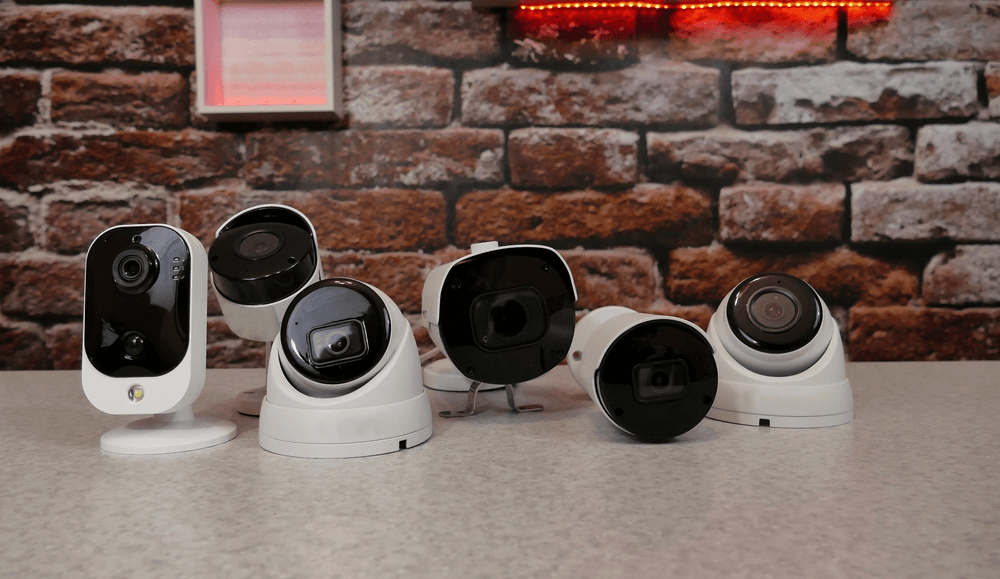
In today's technologically driven world, Closed-Circuit Television (CCTV) cameras play a pivotal role in enhancing security measures for both residential and commercial spaces. With advancements in surveillance technology, various types of CCTV cameras have emerged, each designed to cater to specific needs and environments. Understanding the differences between these types can help individuals and businesses make informed decisions about their security systems. Let's explore the diverse range of CCTV cameras available in the market today:
Dome Cameras
Dome cameras are among the most common types of CCTV cameras, characterised by their dome-shaped housing. They are widely used in indoor and outdoor settings due to their discreet design and vandal-resistant features. Dome cameras offer a wide field of view and are often equipped with pan, tilt, and zoom capabilities, allowing for flexible monitoring.
Bullet Cameras
Bullet cameras are named for their cylindrical, bullet-like shape. These cameras are typically mounted on walls or ceilings and are highly visible, serving as an obstacle to potential robbers. Bullet cameras are known for their long-range visibility and are ideal for monitoring outdoor areas such as parking lots, entrances, and perimeters.
PTZ Cameras
Pan-Tilt-Zoom (PTZ) cameras offer remote-controlled pan, tilt, and zoom functionalities, providing users with the ability to monitor a wide area and zoom in on specific details as needed. PTZ cameras are commonly used in large spaces where constant surveillance is required, such as stadiums, airports, and shopping malls.
Thermal Cameras
Thermal cameras operate by detecting heat signatures emitted by objects and individuals rather than relying on visible light. These cameras are effective in low-light conditions and can provide enhanced visibility in challenging environments such as fog, smoke, or darkness. Thermal cameras are commonly used in borderline security and surveillance applications where traditional cameras may struggle to perform.
Day/Night Cameras
Day/Night cameras are designed to capture high-quality images both during the day and in low-light conditions. These cameras utilise advanced imaging sensors and infrared (IR) technology to deliver clear and detailed footage round the clock. Day/Night cameras are suitable for outdoor surveillance where lighting conditions can vary significantly.
Wireless Cameras
Wireless cameras eliminate the need for massive cables by transmitting video and audio signals wirelessly to a receiver or network video recorder (NVR). These cameras offer installation flexibility and are ideal for temporary surveillance needs or locations where wiring is impractical. Wireless cameras come in various forms, including dome, bullet, and PTZ cameras.
High-Definition (HD) Cameras
HD cameras capture video footage in high definition, providing crisp and clear images with greater detail and clarity. These cameras are essential for applications where image quality is paramount, such as facial recognition, license plate recognition, and evidence gathering. HD cameras are available in various resolutions, including 720p, 1080p, and even 4K.
Network/IP Cameras
Network or Internet Protocol (IP) cameras transmit video and audio data over an IP network, allowing for remote viewing and management via the internet. These cameras offer advanced features such as motion detection, video analytics, and cloud storage integration. IP cameras can be easily integrated into existing network infrastructures and are suitable for both small-scale and enterprise-level surveillance systems.
360-Degree Cameras
360-degree cameras, also known as panoramic cameras, offer a comprehensive view of an entire area without the need for multiple cameras. These cameras utilise multiple lenses to capture a complete 360-degree field of view, allowing users to monitor large spaces with ease. 360-degree cameras are ideal for applications such as retail stores, warehouses, and large open areas.
Covert Cameras
Covert cameras also referred to as hidden or spy cameras, are designed to be discreetly concealed within everyday objects such as smoke detectors, clocks, or motion sensors. These cameras are used for secret surveillance purposes to monitor activities without detection. Covert cameras are commonly employed in investigations, undercover operations, and nanny cams for home security.
Conclusion
In conclusion, the different types of CCTV cameras available in the market caters to various security needs and environments. Whether it's monitoring a small office space or securing a large industrial facility, there's a CCTV camera type suited to every requirement. By understanding the different features and functionalities of each camera type, individuals and businesses can choose the right surveillance solution to protect their assets, offices, and employees.